Sequin History: From Tutankhamun's Tomb to Party Season
Sequin history: 12,000 years of new materials, one unchanged purpose
Sequin history reads, by material, as a price drop from gold to plastic. By purpose it hasn't moved: fix light to the body so other people can see it. A sequin is a small, usually disk-shaped shiny ornament; paillette and spangle are the other names. Party season is when the oldest trick in dress gets its annual outing.
The name is a Venetian coin
The word comes from the Venetian zechin, a ducat coin, which French rendered as sequin. When the ducat stopped being minted after Napoleon's invasion of Italy, French kept the word for the shiny metal discs on clothes. Nineteenth-century sequins were, after all, metal.
Timeline: the Indus Valley, Tutankhamun, Henry VII
| When | What |
|---|---|
| about 12,000 years ago | sequins cut from nautilus shell, found on Alor Island, Indonesia |
| around 2500 BC | gold sequins on clothing in the Indus Valley, Kot Diji phase |
| ancient Egypt | solid gold sequins sewn into royal garments in Tutankhamun's tomb |
| 1485 | London goldsmiths supply silver and gilt spangles for Henry VII's coronation |
| June 1502 | Elizabeth of York pays a coppersmith for "spangelles, stars, drops, and points" |
| 17th to 19th century | the modern spangle, punched from thin metal sheet, in fashion among European nobility |
Egyptomania after November 4, 1922
On November 4, 1922, Howard Carter's team uncovered a single step in the Valley of the Kings, the top of the staircase down to Tutankhamun's tomb. The antechamber was opened on November 26. The Tutmania that followed made Egyptian motifs the decorative fashion of the decade, and sequins came back with it, worn by flappers as a statement. Most of them were still metal.
Materials: from gelatin that melted to vinyl
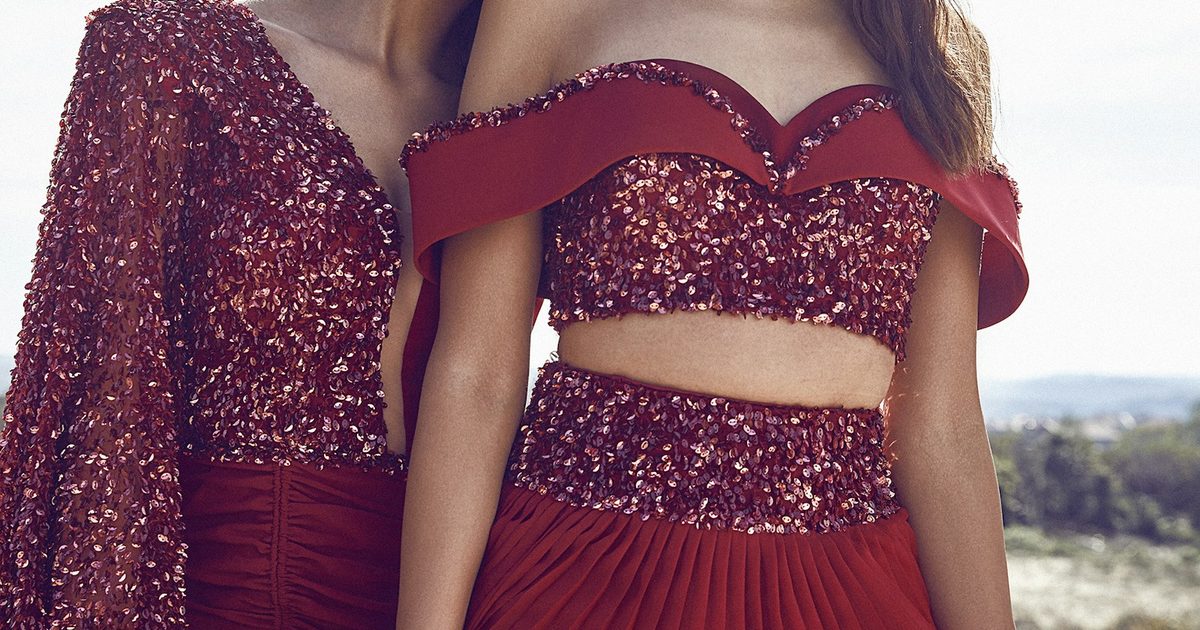
Metal sequins were heavy and expensive. The 1930s brought electroplated gelatin sequins, far lighter, with one flaw: they melted when wet or warm. Algy Trimmings Co., working with Kodak, then made clear plastic sequins, which were brittle. Polyester film was wrapped around plastic sequins so they could survive a wash. Vinyl eventually replaced all of it on durability and cost. That is the step that took sequins from royal tombs to ordinary closets.
Late 1960s: the stage takes over
From the late 1960s, pop acts such as The Supremes wore sequins in quantity, and the habit ran through the 1970s and early 1980s. Wikipedia also lists them among the signature elements of Y2K fashion, with a "better source needed" tag attached. Earlier still, in the Edwardian years, couture houses such as Callot Soeurs made evening dresses covered entirely in sequins.
How it's sewn decides how it shines
Two methods. Stitched flat, a sequin stays put, rarely falls off, and reflects quietly. Stitched at one point, it dangles, moves with you, catches more light. Costume makers split the terms further: a sequin has its hole in the center, a spangle at the top, and a paillette is large and flat. A year-end party has many lights and moving bodies. The second method was made for it.
For wearing them in daylight, see everyday sequins.
"From nautilus shell to vinyl, 12,000 years changed only the material. Nobody has changed their mind about wearing light." — Guushu Design Team