Power Suit History: Chanel, Le Smoking and the Shoulder Pad
Power suit history: how borrowed menswear became women's clothing
The history of the women's suit runs from blending in to standing out. "Power dressing" names the late-1970s and 1980s workplace style that helped women claim authority in rooms run by men. The suit was its core garment, but the story starts earlier.
1920s: the Chanel suit strips out gender
The Chanel suit of the 1920s, a fitted skirt with a wool jacket, is usually named as the ancestor. The costume historian Harold Koda put it this way: it let women de-sex their look and take on a more masculine appearance so they could be accepted as equals at work.
1966: Le Smoking puts women in evening trousers
In 1966 Yves Saint Laurent showed Le Smoking, the first tuxedo suit designed for women. He credited his muse Danielle Luquet de Saint Germain and the trouser suits of the artist Niki de Saint-Phalle. It opened the long, minimal, androgynous line that power suits and pantsuits would follow.
Nan Kempner, the New York socialite, once arrived at La Côte Basque in trousers. The restaurant would not seat women in pants, so she took them off and sat down covered in napkins.
1975: a book makes the skirt suit a uniform
John T. Molloy's Dress for Success (1975) and Women: Dress for Success (1977) sold the skirted suit as the uniform of the professional woman. Early power dressing copied menswear outright: tailored jacket, padded shoulders, knee-length skirt. The jacket played down the bust; the cut did the talking.
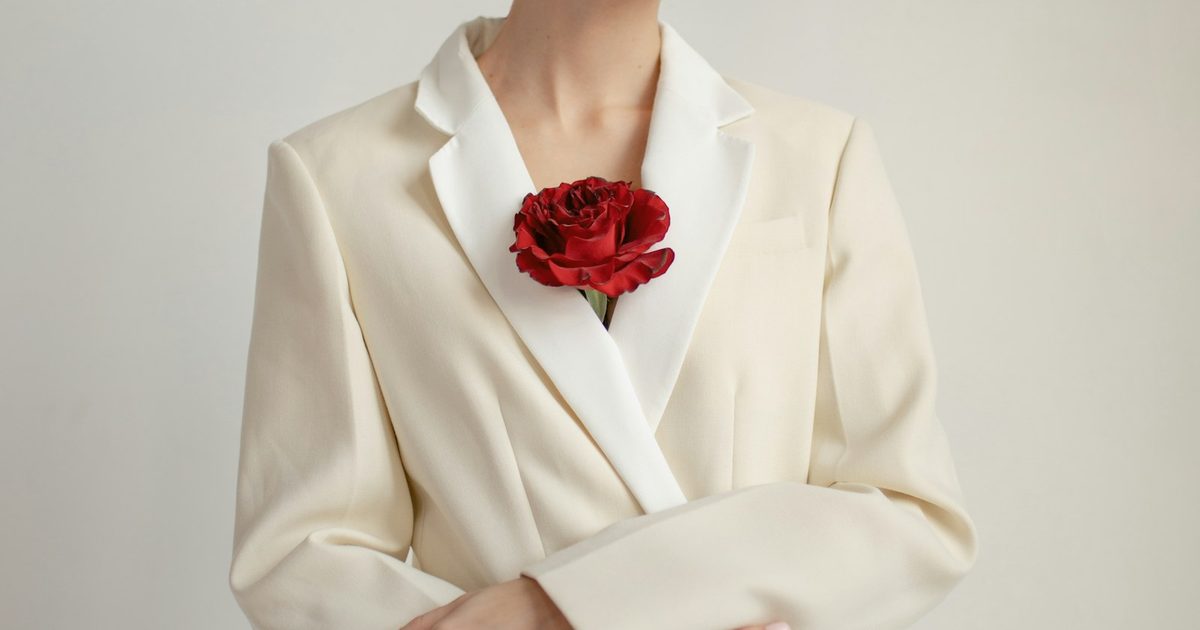
1978: the big shoulder is born
In April 1979 the New York Times wrote that Claude Montana and Thierry Mugler had "pioneered the giant shoulder-pad movement" the year before. Mugler told the Washington Post in October 1978 that big shoulders give a woman "a sense of grandeur and height and presence." Montana's version became the defining feature of 1980s power dressing; his obituary called him the King of the Shoulder Pad.
From borrowing to rebuilding
Once women's standing at work was secure, the suit was rebuilt as a woman's garment: different cloth, different cut, colour, ornament. The aim flipped from passing to being noticed. Silk scarves, brooches, pearls: all of them entered the office in this period.
Margaret Thatcher is the best-known user of the grammar: wide-shouldered skirt suit, pussy-bow blouse, Asprey handbag, pearls. In Working Girl (1988) the boss, Katherine, wears a mid-grey collarless silk jacket with padded shoulders. Tess, the heroine, is described as the first woman in the office who dresses like a woman rather than like a man's idea of one.
Wearing it now
The pads went; the structure stayed. For how a suit sits in an everyday wardrobe today, see modern tailoring for everyday wear.
"Mugler said big shoulders gave a woman presence. Fifty years on we took the shoulders back and kept the presence." — Guushu Design Team